Kas yra nerizikinga prekyba? Kaip jį naudoti Olymptrade
Parašė

Internetinės prekybos platformos tyrinėtojas ir vadovas
Tyrinėja brokerių platformas ir prekybos sąskaitų sistemas.
Prekiautojai gauna nerizikingus sandorius kaip atlygį už aktyvią prekybą ir lojalumą. Tokie sandoriai padeda vartotojams susikaupti, sutaupyti ir užsidirbti pinigų, net jei jie nieko nesupranta apie finansų rinkas.
Taigi, kas yra nerizikinga prekyba? Ar tai premija, apgaulės kodas ar tik prekybininko rezervinis fondas? Šiame straipsnyje mes išsamiai papasakosime apie įdomiausias „Olymptrade“ vartotojų privilegijas.
Taigi, kas yra nerizikinga prekyba? Ar tai premija, apgaulės kodas ar tik prekybininko rezervinis fondas? Šiame straipsnyje mes išsamiai papasakosime apie įdomiausias „Olymptrade“ vartotojų privilegijas.

What Is a Risk-free Trade?
This is a trader’s right to make a trade with a certain amount of money without risking any funds.If the forecast is correct the user receives the profit they have made. But if it’s wrong, the amount of a risk-free trade is returned to the trader’s account.
How Much Funds Can a Risk-free Trade Secure?
Each risk-free-trade has its monetary value. This is the amount of money the user receives if their forecast is wrong.Let’s say a trader activates a $50 risk-free trade and opens a $100 position. In case of a failure, they will get back $50. And if the forecast is correct, they will get a return on a $100 investment.
The First Way to Get a Risk-Free Trade.
Risk-free trades are one of the privileges of an Expert status. A user receives 5% of their first deposit (starting at $2000/€2000/R$5000) as risk-free trades credited to their account. The total amount is split into several risk-free trades for ease of use.The Second Way to Get a Risk-Free Trade
Another way to get them is using promo codes. Keep an eye out for our contests, tournaments and other campaigns held on our social media and blog. You can get your promo code to receive a risk-free trade for answering questions and completing tasks.There is also a way to mix business with pleasure — don’t miss the free webinars conducted by our VIP department. Over the period we have held such events, webinar attendees received more than $100, 000 in risk-free trades.
The Third Way to Get a Risk-Free Trade
Trade actively, receive experience points and move along the Trader’s Way. You will receive different amounts as risk-free trades as well as other rewards that await you between the levels.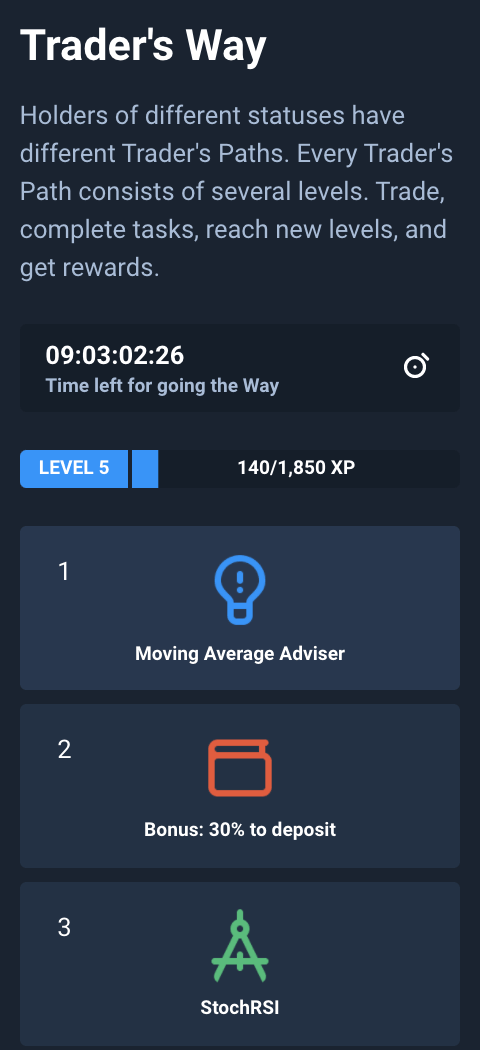
How Soon Does a Risk-Free Trade Expire?
Traders are very worried about the period of time when they can use a risk-free trade. Can it expire? Here is good news for them: such trades do not expire. You can take your chance whenever you want.How to Use a Risk-free Trade on Olymptrade?
Step 1. Click on the shield icon. Then select “Activate”, choosing the trade amount you need. You can do the same using the mobile version of the platform.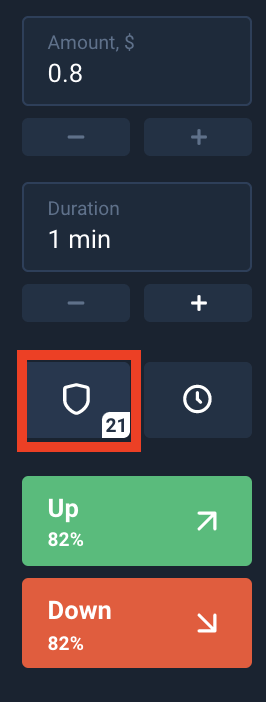
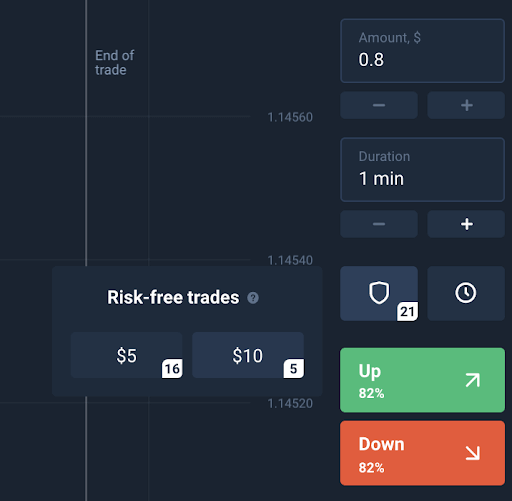
Step 2. If everything is ok, shield icons will appear on the buttons used for choosing the trade’s direction, and you will see the value of the risk-free trades in the trade amount input field.
Step 3. Make a trade. Please note that you can deactivate a risk-free trade only before opening a position.
The Best Way to Use a Risk-free Trade on Olymptrade
Patyrę prekiautojai teigia, kad nerizikingi sandoriai yra jūsų rezervinis fondas, kurį turėtumėte naudoti tik išimtiniais atvejais.Tačiau vienas iš geriausiai žinomų išmintingo šių sandorių naudojimo pavyzdžių yra jų aktyvavimas kaip dar vienas nuostolių kompensavimo sistemos „žingsnis“.
Išanalizuokime šį atvejį. Tarkime, prekiautojas turi 50 USD vertės nerizikingą sandorį. Štai kaip tai galima panaudoti:
- kaip 4-asis nuostolių kompensavimo sistemos žingsnis, jei prekiautojas pradeda nuo 3 USD (3, 7, 18, 46 USD)
- trečiame žingsnyje, jei prekiautojas pradeda nuo 7 USD (7, 17, 43 USD)
- taip pat kaip 3-ias žingsnis, jei jų pirmasis žingsnis yra 8 USD (8 USD, 20 USD, 50 USD)